Not backpacks
omnimem: an agent that remembers what already failed.
A separate project by Ric Harvey at SquareCows, written up here because its flyers landed on this site. Free, open source, and it runs on your own machine.
What it is
An AI coding assistant starts every session knowing nothing. It has not seen your project before, and it does not remember the evening you lost last week working out why something did not work. So you explain it again — and it confidently suggests the very approach that already failed.
omnimem gives it a memory that lasts: across sessions, across projects and across machines. One program, one file of memories, speaking a protocol called MCP — the way assistants like Claude Code, Cursor and Copilot plug tools in. Point the assistant at it once and the memory is simply there.
What it remembers
Five kinds of memory, all searched together whenever the assistant looks something up.
- Episodic — decisions made, bugs fixed, patterns noticed: the hard-won things you should not have to work out twice.
- Project context — what the project is built from, what it is for and where it has got to, so the assistant arrives briefed rather than cold.
- Knowledge — articles from news feeds you choose, fetched on a schedule and stored alongside everything else.
- Preferences — how you like to work, picked up from your conversations and raised when they apply.
- Skills — lessons compiled into documents the assistant can load, so it works your way from the first instruction. Nothing is compiled without your say-so.
Memories fade rather than vanish: active, then deprioritised, then archived. “Forget about X” usually means stop bringing it up, not erase it.
The graveyard
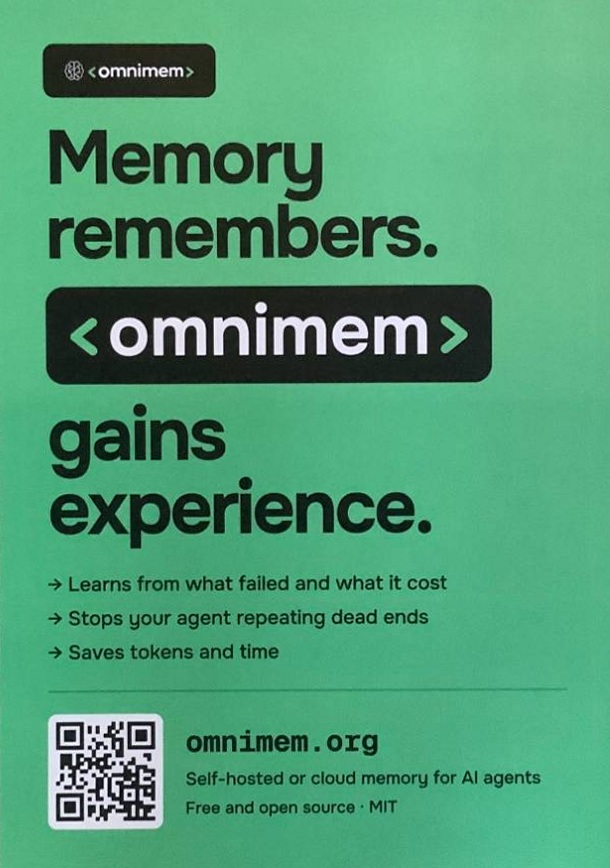
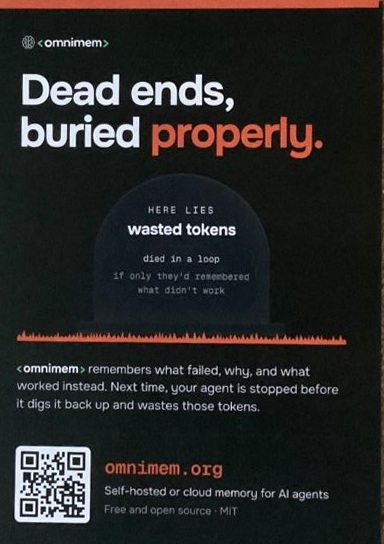
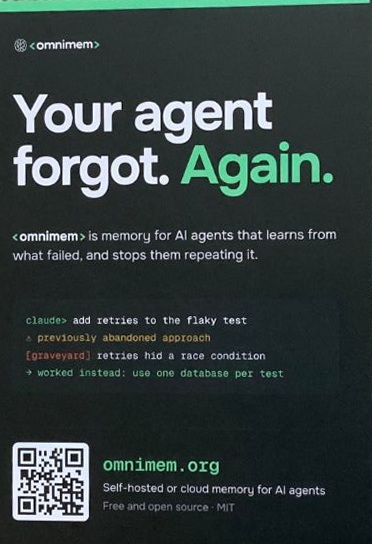
The part the flyers are about. Every dead end is written down: what was tried, why it failed, and how much time it burned. Before the assistant suggests a library or an approach, it checks that list — and if you are about to be sent back down a road that was already a dead end, it says so first, with what worked instead.
The harder a lesson was to learn, the more readily it comes back: something that took four attempts and an odd workaround is worth more than something that worked first time. With the hooks for Claude Code installed this happens whether or not the assistant thinks to look — the project briefing goes into the start of every session, a step repeating a known dead end is stopped before it runs, and what the session changed is recorded at the end.
Running it yourself
There is no account to make and nothing to subscribe to. On a desktop it sits in the menu bar or system tray — macOS, Windows or Linux — with a window for browsing what it has remembered. On a server it runs headless, and every machine and assistant you use can share the one memory.
Turning your text into something searchable happens on the machine itself, so nothing is sent anywhere unless you opt in by adding an API key for the optional extras. Your memories are a single file: back it up the way you back up any file. It is MIT licensed — free to use, fork and modify.
The flyers
Printed, photographed and straightened out.